Exploring the Potential of Agarwood Cultivation on HTR Land in Tualan Hulu
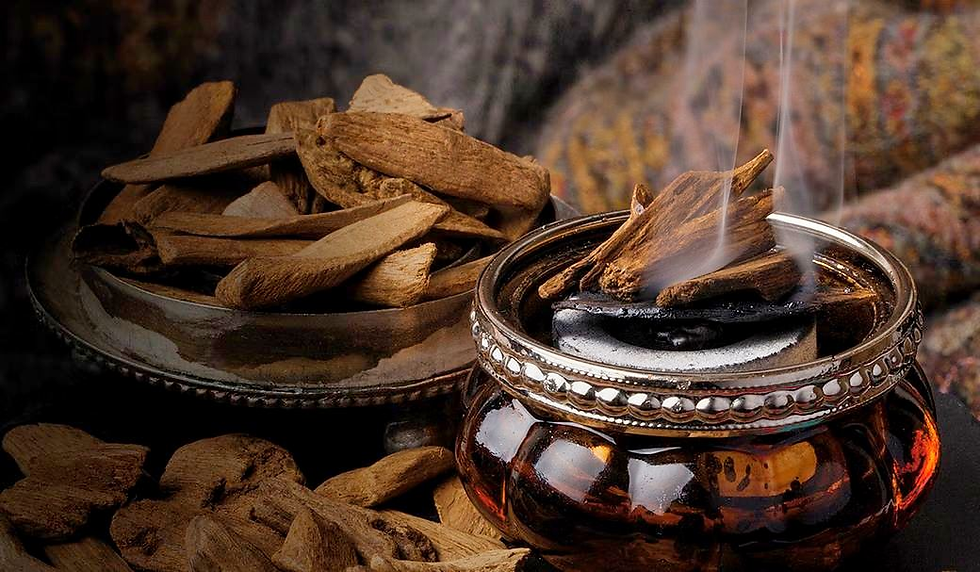
When I first smelled oud (Agarwood) , I honestly did not enjoy it. Compared to the fresh, fruity, aromatic, or gourmand fragrances I usually wear, oud smelled dark, woody, smoky, and even a little animalic. It felt like a fragrance made for someone much older than me. Even today, it is still not my favorite perfume note but I'm still trying to get used to it.
However, the more I learned about fragrance science, the more I realized that the story behind oud is far more enjoyable than its scent.
That curiosity introduced me to agarwood, the tree that produces the rare resin inside it used to create oud. I discovered that agarwood is not only one of the world's most valuable natural fragrance ingredients but also an important forest resource. It made me wonder if a tree famous for luxury perfumes could also help protect forests and improve the lives of local communities.
Potential of Agarwood Cultivation on HTR Land in Tualan Hulu
One place where this idea caught my attention is Tualan Hulu District in Kotawaringin Timur Regency, Central Kalimantan. Indonesia has a program called Hutan Tanaman Rakyat (HTR), or Community Plantation Forest, which gives local communities the opportunity to manage forest land legally and sustainably.
HTR is not simply about planting trees. It is about finding ways for people and forests to grow together.
Although HTR has created many opportunities, not every area fully reflects its original purpose. In some places, the land is mainly used for commodities that are more closely associated with plantation agriculture than forestry. These crops certainly contribute to local economies, but they also made me wonder whether native forest species could play a bigger role in supporting both conservation and community development.
One tree that stands out is agarwood. Unlike many commercial crops, agarwood is naturally part of forest ecosystems. It can be grown using agroforestry, where different trees and crops share the same land instead of replacing each other. This approach helps maintain biodiversity, improves soil quality, reduces erosion, and creates a healthier environment.
Instead of clearing forests, communities can continue protecting them while still producing something valuable.
More Than a Luxury Fragrance Ingredient
What makes agarwood even more interesting to me is its economic value. Oud is VERY expensive and brands sells fragrances with oud like LV Ombre Nomade, MFK Oud Satin Mood, PDM Haltane, and Amouage Oud fragrances they have very high prices. Why? Because high-quality agarwood resin is rare and takes years to develop, these perfumes can sell for hundreds or even thousands of dollars per bottle. This demonstrates how a sustainably managed forest product can create significant economic value while encouraging responsible cultivation.
I also think it is interesting and brilliant that agarwood encourages people to think long term. Farmers cannot simply plant a tree and expect immediate results. Growing agarwood requires patience, care, and good management. In return, the trees continue providing environmental benefits while gradually becoming more valuable over time. To me, this is a good example of how economic development and environmental protection don't always have to compete with each other.
Another important benefit is conservation. As global demand for oud continues to grow, wild
agarwood trees have faced increasing pressure from illegal or unsustainable harvesting. Cultivating agarwood on HTR land could help reduce this pressure by supplying legal and sustainably grown agarwood instead of relying on natural forests. Protecting forests while meeting market demand is a solution that benefits both people and nature.
Of course, agarwood cultivation is not simple. Farmers need access to quality seedlings, technical training, inoculation methods, harvesting knowledge, and reliable markets.
Universities, government agencies, cooperatives, and responsible companies all have an important role to play. By working together, they can help local communities build a sustainable agarwood industry instead of leaving farmers to face these challenges alone.
Looking Ahead
As someone who enjoys learning about chemistry and hopes to study chemical engineering in the future, I find this topic especially inspiring. Chemistry is not only about understanding molecules inside a laboratory. It is also about finding better ways to use natural resources responsibly. The story of agarwood shows that science can connect forests, communities, sustainability, and even the fragrances people wear every day.
Writing this essay completely changed the way I think about oud. What I once considered one of my least favorite perfume notes has become a reminder that every fragrance has a story. that may help other peopleE.Sometimes, the most valuable fragrance does not begin inside an expensive perfume bottle. It begins in a healthy forest, fully cared for by local communities and protected for future generations.
"Agarwood cultivation on HTR land in Tualan Hulu has the potential to become a bridge between forest conservation and community-based economic development."
References
Samsudin, Y. B., et al. (2021). The Potential of Agarwood as a Climate-Resilient Livelihood Option in Indonesia. Center for International Forestry Research (CIFOR).
International Tropical Timber Organization (ITTO). Agarwood: Production, Trade and Sustainable Management.
World Agroforestry (ICRAF). Research on sustainable forestry and community livelihoods.


Comments